AI Is Not the Great Equalizer
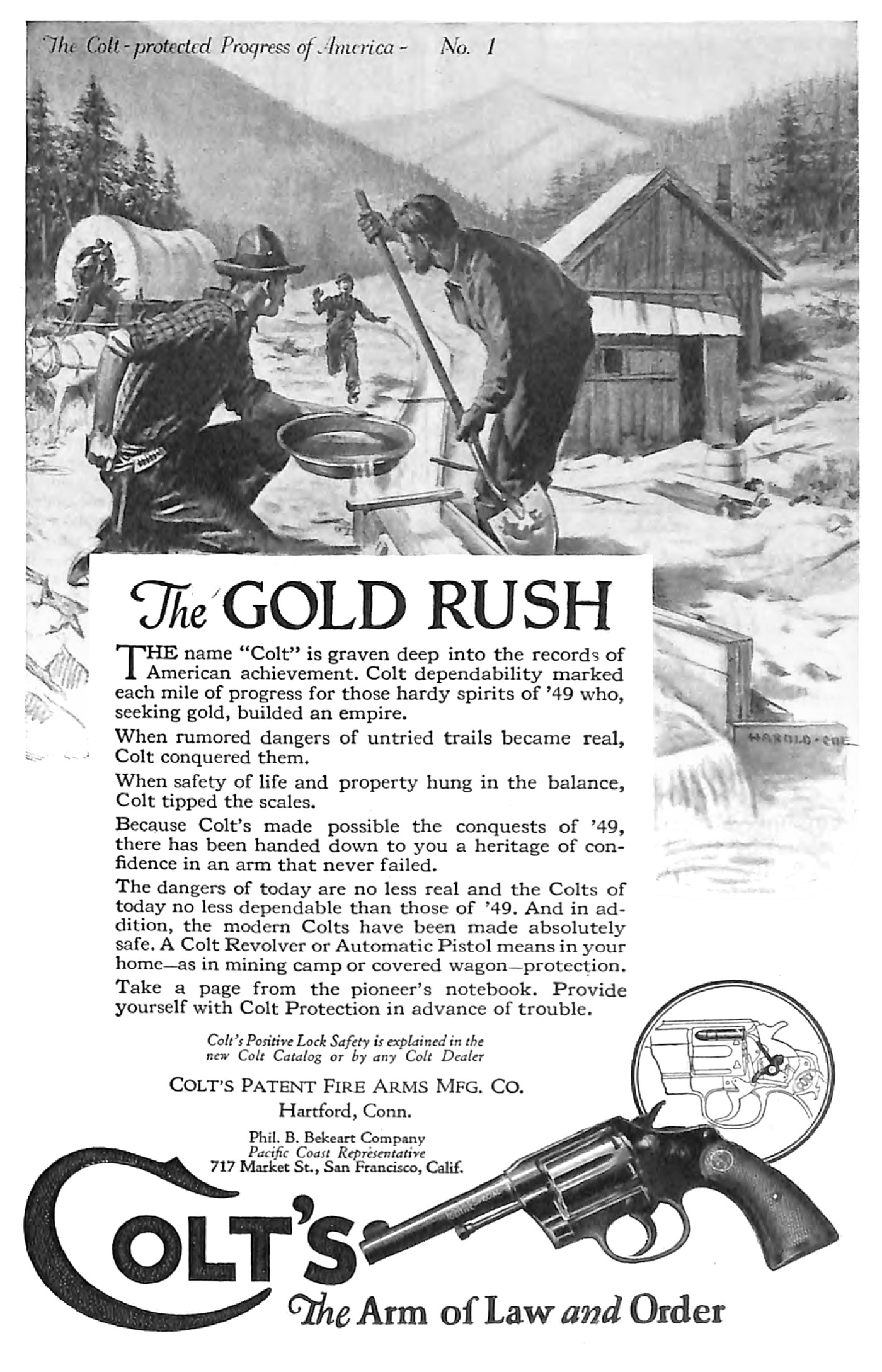
God created men and Colonel Colt made them equal, or so people say.1 A 1926 Colt ad makes a smaller claim: when safety of life and property hung in the balance, Colt tipped the scales.2
As printed by True West. I found no first use and nothing showing Colt said it.
The Elks Magazine, 1926, "The Colt-protected Progress of America, No. 1". Public domain, via Wikimedia Commons.
AI gets sold the same way. Give everyone the agent and the gap closes. But an agent is a multiplier, and a multiplier gives the most to whoever has the most to multiply.
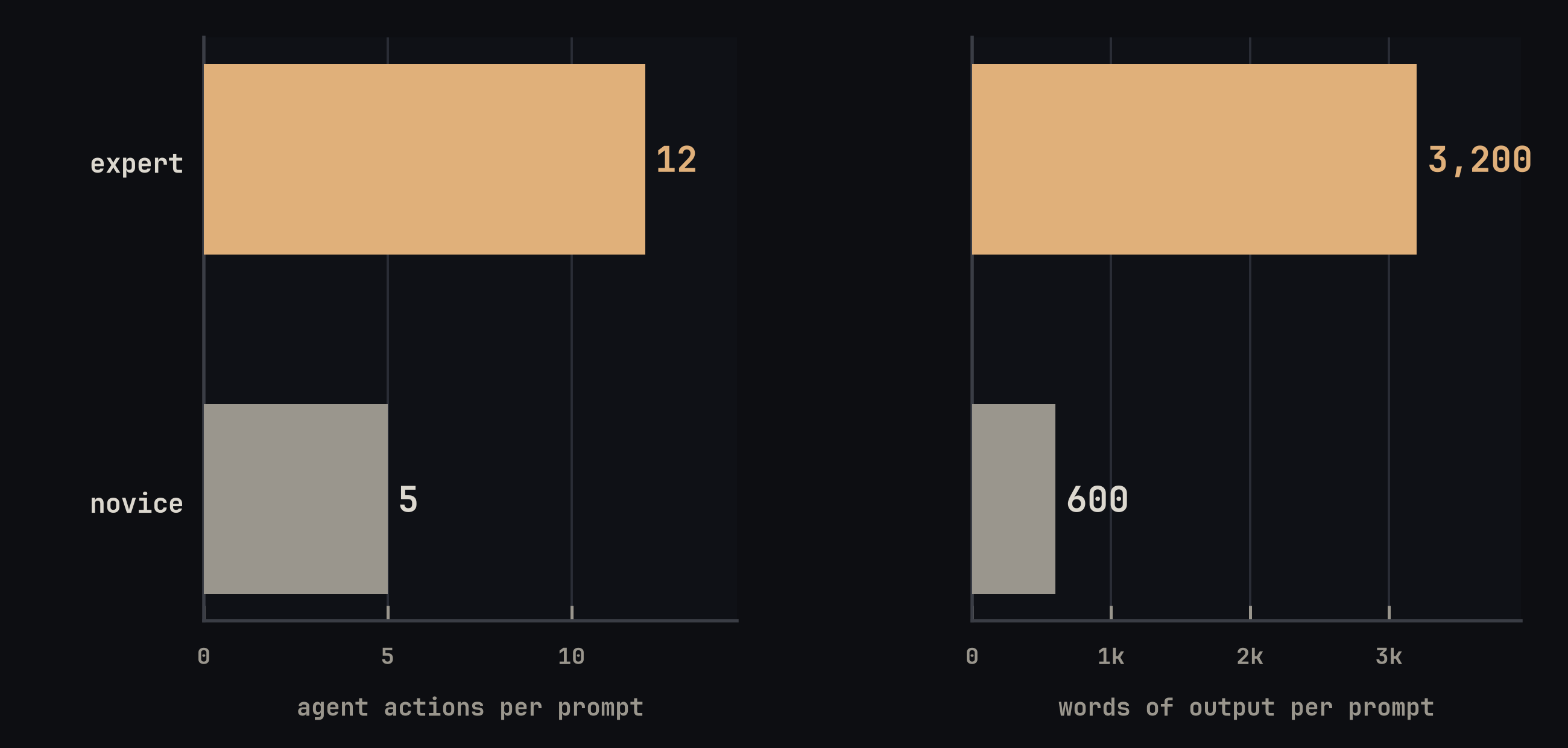
The best data on this is what people actually do with agents. Anthropic read about 400,000 Claude Code sessions and rated how much each user knew about the task at hand. The same single prompt set off 12 actions and 3,200 words of output from an expert, against 5 actions and 600 words from a novice.3 The agent does more work per instruction for the person who knows what to instruct.
Anthropic, "Agentic coding and persistent returns to expertise", June 2026, Claude Code sessions from October 2025 to April 2026. Expertise is rated by a model from the transcript and is specific to the task, not the person. Typical session values, per prompt.
It shows up in whether the work succeeds. A novice session was verified successful 15% of the time. Intermediate and expert sessions, 28 to 33%. When things went wrong, 19% of novice sessions were abandoned and 5 to 7% of the rest.4 The skill that mattered was knowing the domain, not knowing how to code.
Same report. Verified success needs a judged success plus a hard signal such as passing tests or a commit. Most of the gain comes between novice and intermediate. Expert against intermediate is modest, and I'd rather say so than hide it. They do not observe real-world outcomes.
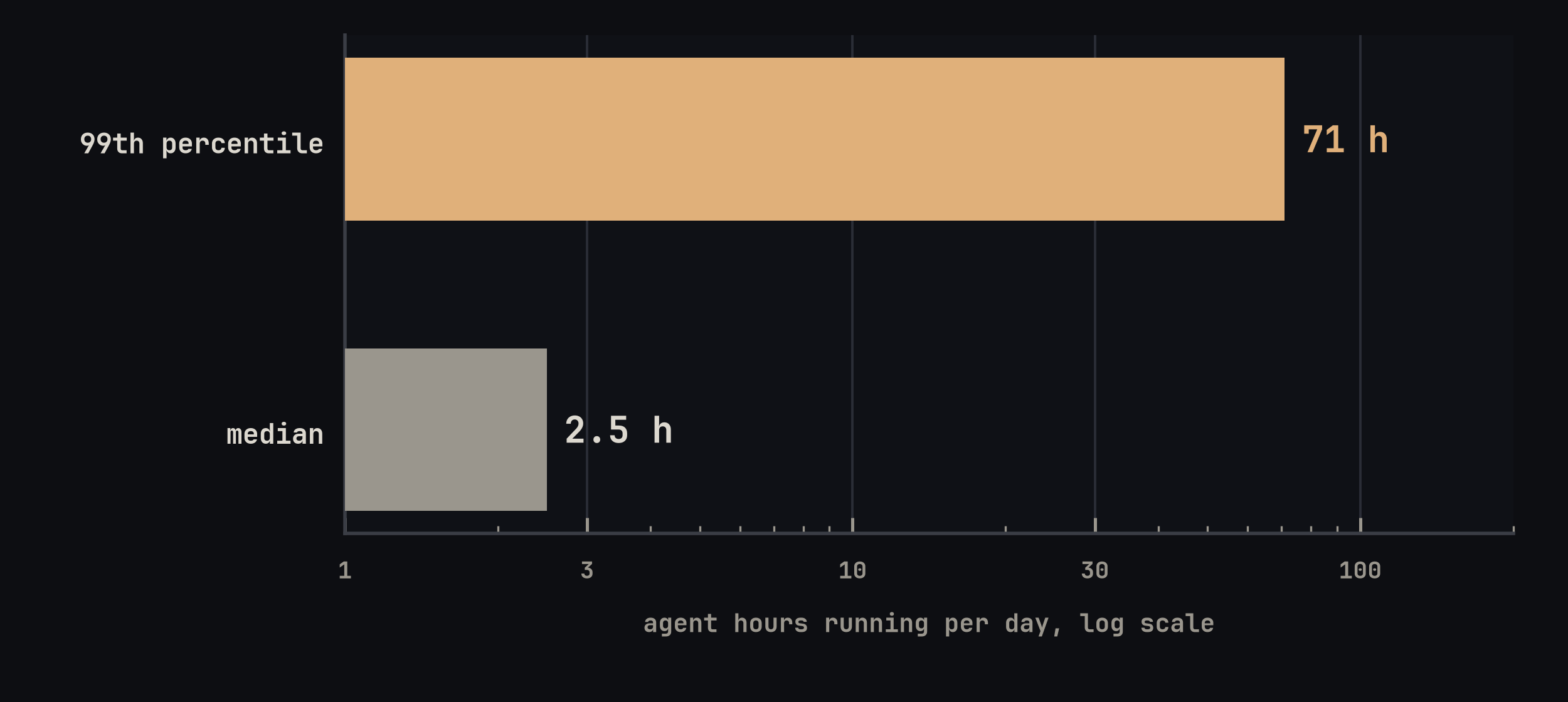
It also shows up in how much work gets handed over. Users give Claude Code full auto-approve about 20% of the time in their first 50 sessions and over 40% by their 750th.5 At OpenAI, the median employee had Codex running for 2.5 hours on a given day. At the 99th percentile it was 71 hours, several agents at once.6
Anthropic, "Measuring AI agent autonomy in practice", February 2026. Part of the rise may be users changing settings, and the paper says so. Experienced users also interrupt more, 9% of turns against 5%.
Johnston et al., "The Shift to Agentic AI: Evidence from Codex", OpenAI, June 2026. Runtime sums overlapping turns, so it can exceed 24 hours. Outside OpenAI the numbers are far lower. Those are OpenAI employees, a very unusual population.
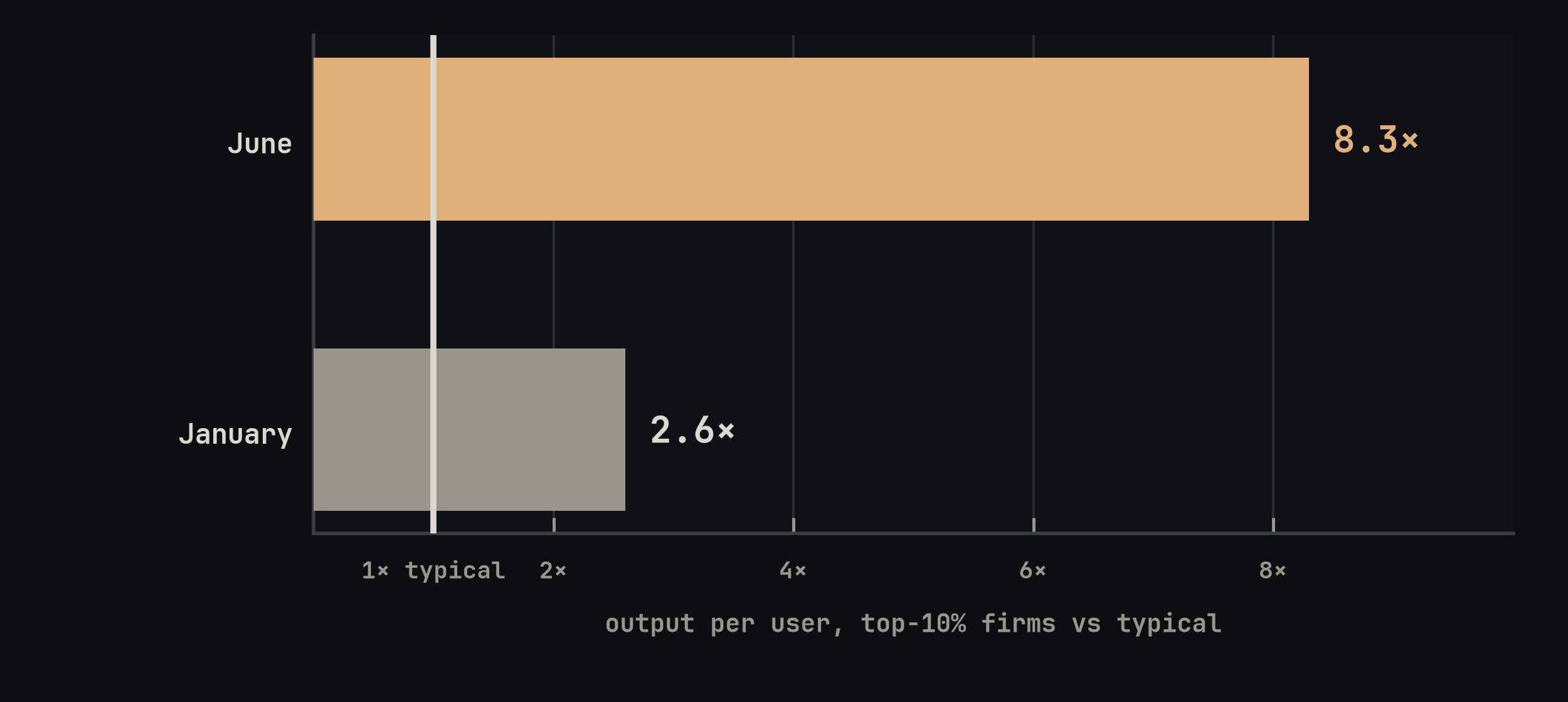
Firms look the same. OpenAI ranks its enterprise customers by output tokens per active user. The top 10% now produce 8.3 times what a typical firm does, up from 2.6 times in January.7
OpenAI, "From assistance to execution", August 2026. Frontier firms are the top 10% by output tokens per active user in a month, compared with firms between the 45th and 55th percentiles. Tokens are a proxy for depth of use, not for value produced.
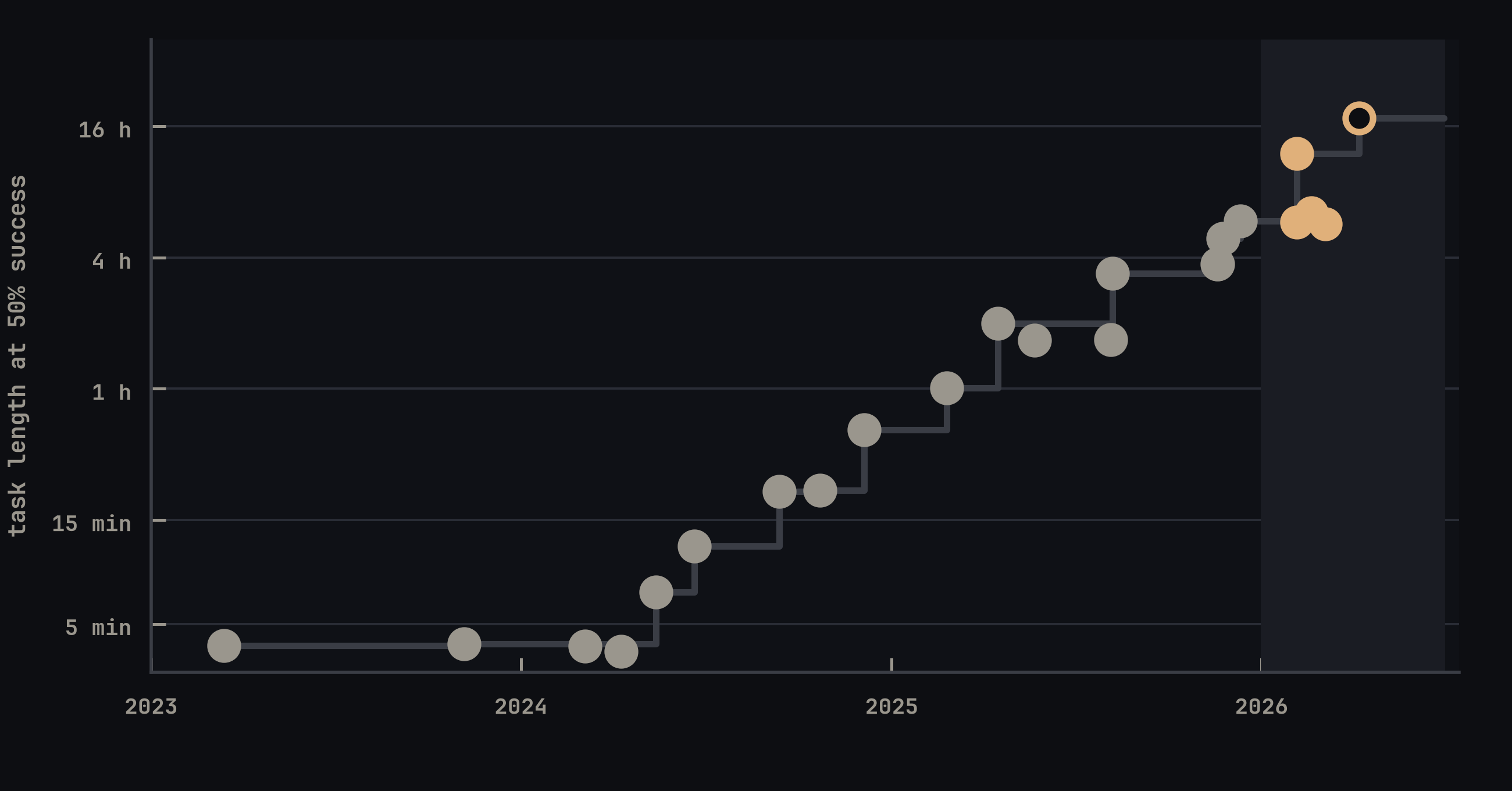
The tool improved over the same months. METR measures the longest task an agent finishes half the time, in human hours. The best measured model went from about 6 hours in December to about 17 in April, roughly threefold.8 The gap between firms grew a bit over threefold in those months. That is a parallel, not proof of cause, but it is what a multiplier would do: the better the tool, the more it pays whoever can already use it.
METR, Time Horizon 1.1, task-completion data file. GPT-5.2 at 352 minutes (December 2025) and Claude Mythos Preview at 1,045 minutes (April 2026). METR flags measurements above 16 hours as unreliable, and its tasks are cleaner than real jobs. The horizon is how hard a task is for a human, not how long the agent runs. Prices tell a similar story: Gundlach et al. find the price of a fixed benchmark level falls 5 to 10 times a year, while the cost of running the frontier rises.
None of this is a surprise if output was lopsided before. Across 633,263 researchers, entertainers, politicians and athletes, performance follows a power law, not a bell curve.9 Multiply a skewed distribution and you get a more skewed one.
O'Boyle and Aguinis, "The Best and the Rest", Personnel Psychology, 2012. 198 samples.
The agent is the same for everyone. The people directing it are not.